Introduction: The High Cost of Measuring a Flawed Campaign
Picture the scenario. You've invested in a sophisticated, cross-channel measurement framework — geo-lift tests, Marketing Mix Modeling, incremental return on ad spend (iROAS) tracking, the works. The campaign launches, runs its course, and the report comes back: low incremental return, weak conversions, underwhelming results across the board.
The instinct at this point is to blame the measurement tool, or at least to assume something in the tracking setup went wrong. But that instinct is misplaced. The measurement tool didn't fail. It did exactly what it was built to do — it accurately reported that your campaign bombed. The real failure happened weeks earlier, on the drawing board, long before a single dollar hit a media platform.
Post-launch measurement tools tell you where money was wasted; pre-launch tools ensure it isn't wasted in the first place. Modern marketing requires solving both halves of the loop.
This is the core thesis of this article: measurement and creation are not competing priorities, they are two halves of the same system. Brands that pour resources into one while neglecting the other are, by definition, only solving half the problem.
The Root Problem: The Pre-Launch "Assumption Trap"
To understand why measurement alone can't rescue a campaign, it helps to look at how most campaigns are actually built. In the traditional model, briefs are constructed around internal product features, corporate jargon, and static buyer personas that were drafted months or years ago and rarely revisited. Marketers sit in a room and guess why buyers hesitate, often defaulting to the comfortable but flawed assumption that a click equals genuine buying intent.
This is where the trap springs shut. A brief built on assumption rather than evidence sets the entire campaign up to underperform before creative is even produced, before media is bought, before a single impression is served.
The "Garbage In, Garbage Out" Effect
If the core message misses the real friction a buyer is experiencing, no amount of downstream channel reallocation or budget optimization will save it. You can shift ad dollars from Meta to Google Search, double down on retargeting, or tweak bid strategies all day long — but if the underlying message was never aligned with what's actually stopping buyers from converting, you are simply moving underperforming traffic from one platform to another. The waste doesn't disappear. It just changes its address.
Stage 1: Solving Creation Upstream
Replacing Guesswork with Predictive Simulation
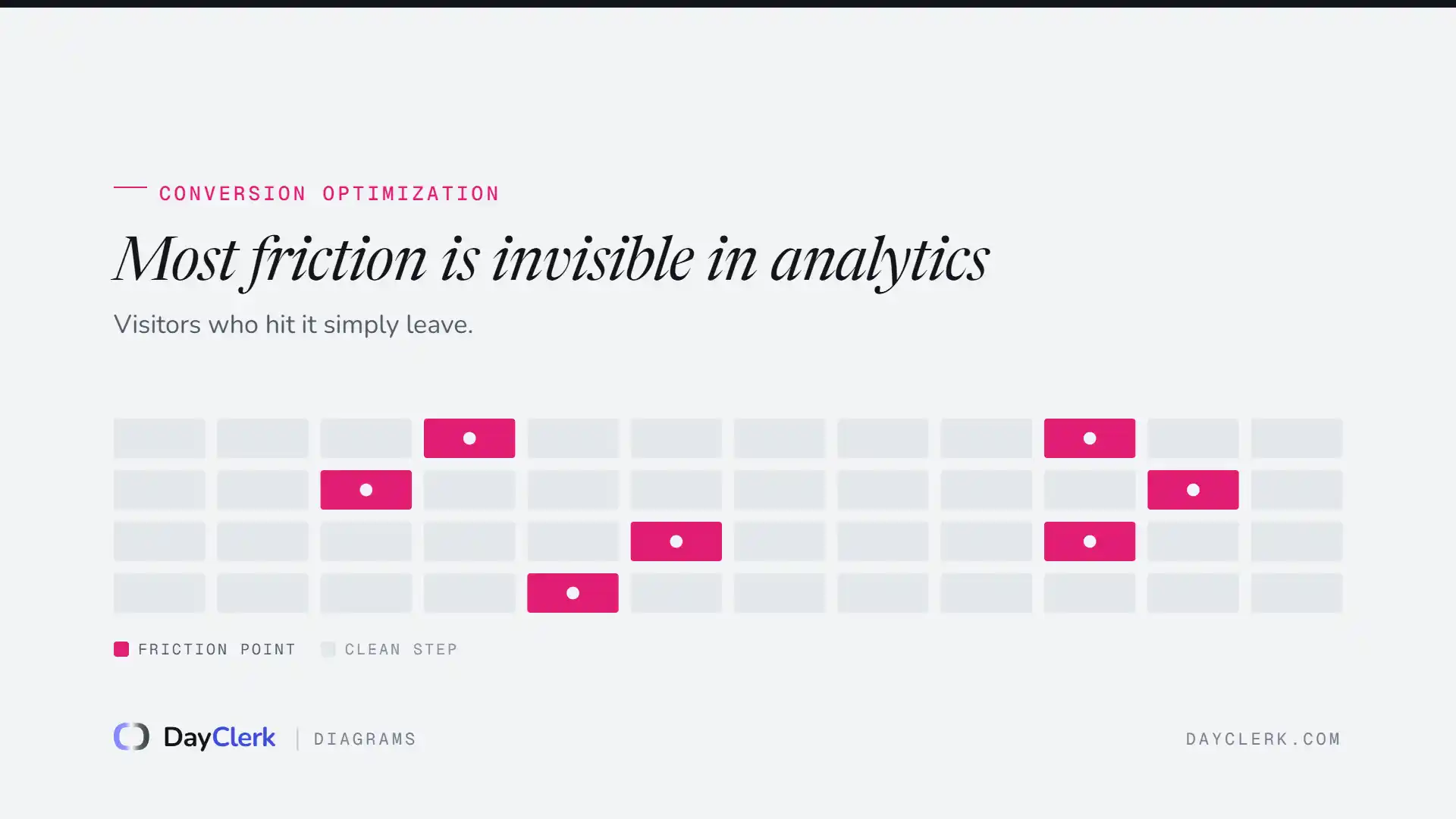
The upstream fix is to stop guessing and start modeling. Pre-launch behavioral modeling can identify buyer hesitation, friction points, and drop-off risks before ad dollars are committed — replacing internal debate and gut instinct with a simulated, evidence-based view of how real buyers actually respond.
From Single Brief to Aligned Execution
Once those friction points are identified, the next step is translating them directly into execution. Rather than producing a single brief and hoping creative teams interpret it faithfully, this approach generates campaign assets — landing pages, emails, ad copy — that directly target the simulated friction points. The goal shifts from chasing superficial vanity clicks to engineering messaging and experiences that speak to the real objections standing between a buyer and a conversion.
The ROI of Pre-Launch Validation
The payoff of this approach shows up immediately at launch. Because the assets are pre-tuned for true conversion mechanics rather than surface-level appeal, wasted media spend is reduced from Day 1 — not weeks into a campaign once the reporting finally reveals what should have been caught beforehand.
Stage 2: Validating Impact Downstream
Why Upstream Creation Needs Downstream Proof
Better creation upstream doesn't eliminate the need for rigorous measurement downstream — if anything, it raises the stakes for getting measurement right. Once optimized assets hit the market, marketers need an independent, cross-channel source of truth to prove that the improved creation actually translated into real business growth.
Beyond Platform Vanity Metrics
This is where platform-native reporting falls short. Relying on platform-native ROAS leads to systematic overcounting, because each platform effectively grades its own homework, claiming credit for conversions that may have happened anyway. Causal incrementality, measured as iROAS, is required to verify real lift — the portion of results that genuinely wouldn't have occurred without the campaign.
Closing the Feedback Loop
The real power emerges when these two halves inform each other. Post-launch causal data doesn't just grade the campaign that already ran — it validates (or challenges) the predictive models used to build it, refining the strategy for the next campaign cycle. Over time, this feedback loop makes both the creation and measurement systems smarter.
Upstream creation and downstream measurement aren't separate disciplines competing for budget — they are one continuous loop, and each half makes the other more valuable.
The Complete Flywheel: How the Two Halves Work Together
Laid out side by side, the division of labor between the two phases becomes clear. Pre-launch work exists to eliminate assumptions and model buyer friction, producing high-converting, segment-grounded campaign assets. Post-launch work exists to isolate true incremental revenue, producing cross-channel proof of actual business growth. Neither phase can substitute for the other — a brilliant pre-launch model with no measurement leaves you unable to prove impact to stakeholders, while a sophisticated measurement stack bolted onto a flawed brief simply reports failure with great precision.
Conclusion & Call to Action
The summary is simple: stop using your ad budget as an expensive testing ground for unverified assumptions. Every dollar spent validating a guess in-market is a dollar that could have been protected by validating that same guess before launch.
The key takeaway is to protect your budget on both ends of the campaign lifecycle — use predictive behavioral simulation to build better campaigns from the outset, and unified measurement to prove their true business impact once they're live.
Ready to eliminate the guesswork before your next launch? Explore how DayClerk simulates buyer friction and builds high-converting assets from a single brief.